
Posts tagged "security"

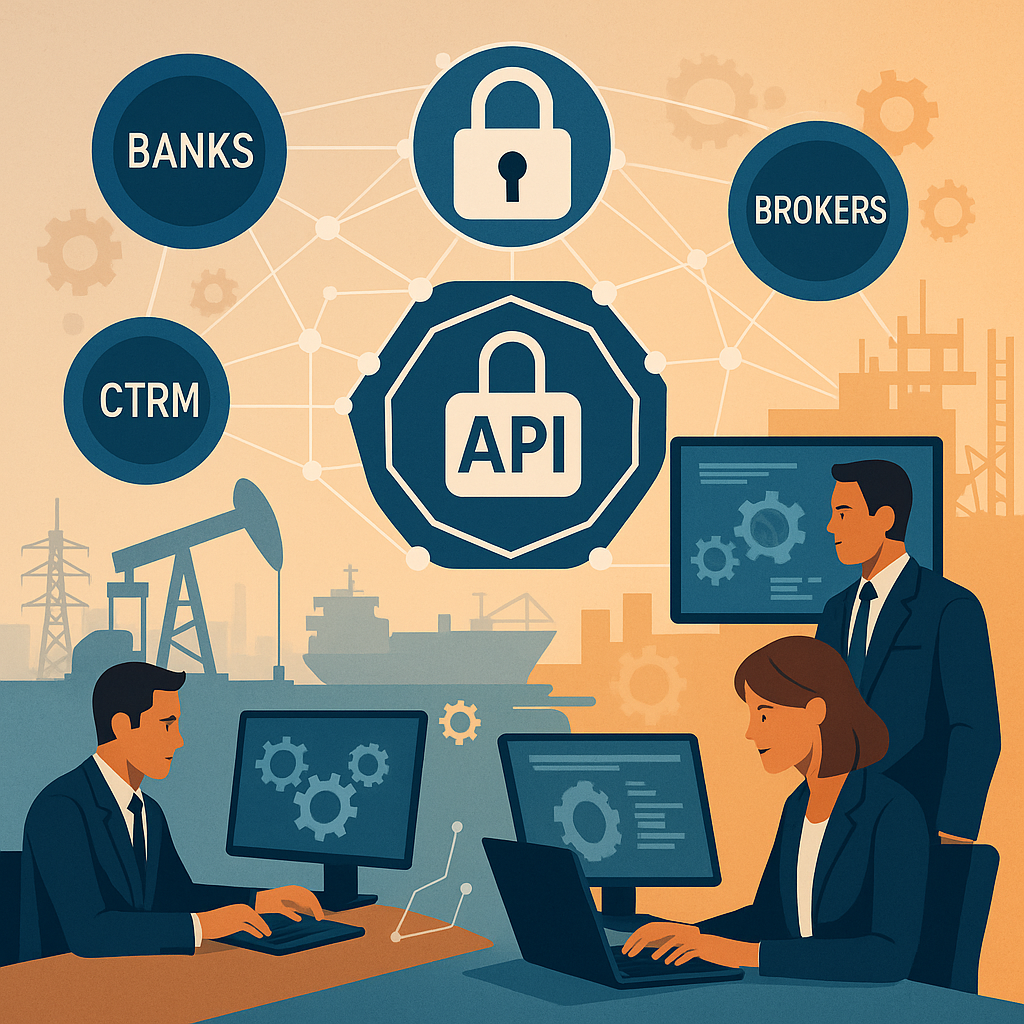
Securely Connecting Banks, Brokers, and CTRM Systems Through APIs

Commodity trading involves a constant flow of data between banks, brokers, and CTRM systems. Payments, confirmations, collateral management, and risk exposures must all be updated quickly and accurately. For CIOs, APIs are the foundation of secure and efficient integration across this ecosystem.

APIs allow real-time data sharing, reducing manual reconciliation and errors. Modern architectures use REST or gRPC APIs to connect .NET-based CTRM systems with external financial institutions. Python plays an important role in building adapters and automating validations, while Databricks and Snowflake provide platforms for storing and analyzing data received from multiple counterparties.

Security is the biggest concern. Every API must be authenticated, encrypted, and monitored to prevent unauthorized access. Azure API Management and Kubernetes ingress controllers provide centralized governance and scaling for large numbers of API calls. These controls ensure compliance with regulations and maintain the trust of trading partners.

Internal IT teams often struggle to design and deploy secure APIs while maintaining daily operations. Staff augmentation offers a solution. External engineers with API security expertise can design access policies, implement monitoring, and integrate APIs with CTRM and back office systems. This allows CIOs to accelerate projects while avoiding security risks.

APIs are no longer just a technical convenience. They are a strategic tool that underpins the speed, trust, and compliance of modern commodity trading. With staff augmentation, CIOs can ensure these integrations are secure, reliable, and scalable.

Zero-Trust Security Models for CTRM and ETRM Systems

Cybersecurity remains one of the top risks for commodity trading firms. CTRM and ETRM systems sit at the heart of trading operations, storing sensitive contract, pricing, and counterparty data. A single breach can halt operations and damage reputation. Traditional perimeter-based security is no longer enough in today’s distributed and hybrid IT environments.

Zero-trust security provides a new model. Instead of assuming trust inside the network, every user and system must continuously authenticate and verify before accessing resources. For trading firms, this means enforcing strict access controls for CTRM systems, ensuring data flows into Databricks or Snowflake are encrypted, and monitoring all API interactions.

The technology stack to implement zero-trust is complex. Firms must integrate .NET authentication layers with Azure AD, deploy Python-based monitoring scripts, and configure Kubernetes environments for micro-segmentation. On top of that, regulators demand audit trails that prove compliance with access and identity policies.

Internal IT teams often lack the bandwidth to roll out zero-trust across legacy and modern systems simultaneously. Staff augmentation bridges this gap. External engineers with cybersecurity expertise can design access policies, implement secure APIs, and deploy monitoring solutions that integrate seamlessly with CTRM and ETRM platforms. Meanwhile, internal staff maintain daily trading support without disruption.

Adopting zero-trust is not just about compliance. It is a proactive defense against increasingly sophisticated cyber threats. For CIOs, combining internal knowledge of business workflows with augmented technical specialists provides the fastest path to a resilient, secure trading environment.