
Posts in "Modernization"

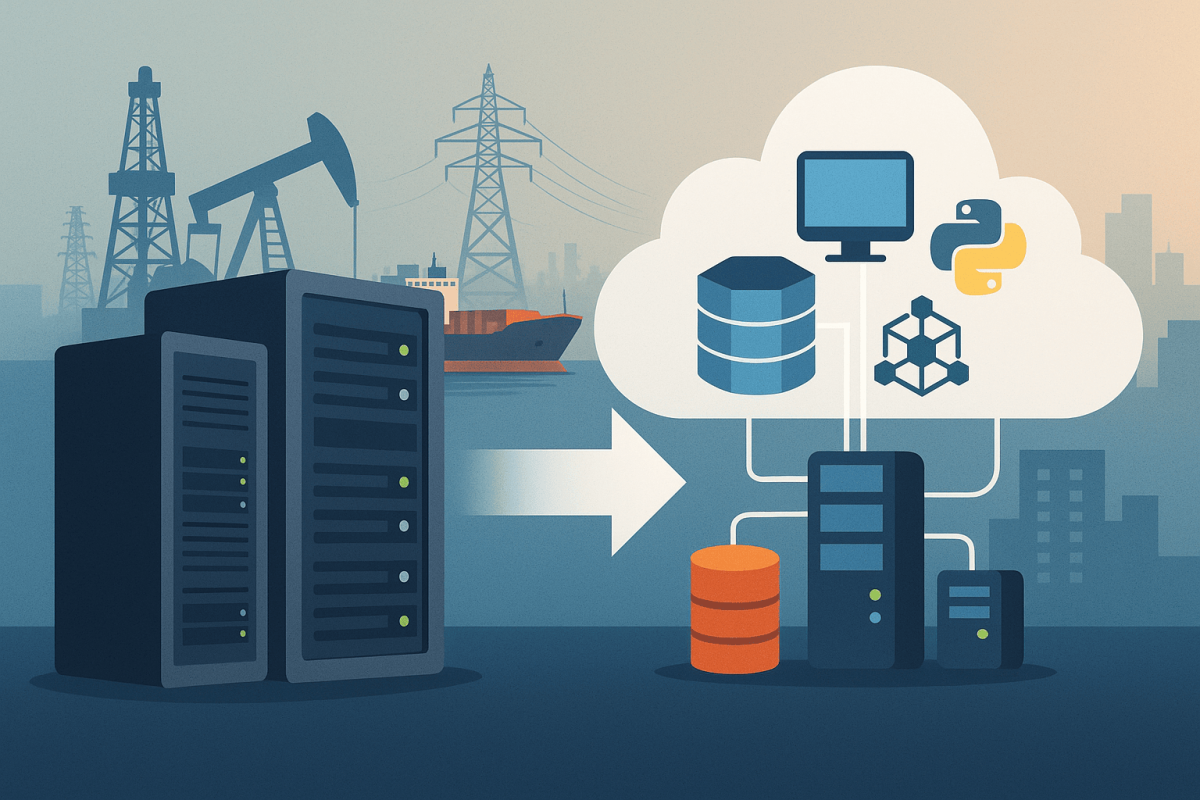
Why Commodity Trading Firms Still Rely on Legacy C# .NET Systems and How to Modernize

Many commodity trading firms still depend on legacy C# .NET systems that were built years ago. These platforms are deeply embedded in trading operations, handling everything from deal capture to settlements. Despite their age, they continue to run because of their reliability and the difficulty of replacing them.

However, reliance on legacy systems creates challenges. They are harder to integrate with modern platforms like Databricks and Snowflake, they limit the adoption of cloud-native approaches in Azure and Kubernetes, and they require scarce skills to maintain. As markets evolve, firms that remain locked into these systems risk falling behind competitors who can innovate more quickly.

Modernization does not always mean replacing everything at once. CIOs can begin by building APIs that extend the functionality of .NET applications, allowing them to connect with modern services. Python can be used for data processing and machine learning, while Databricks provides a scalable environment for analytics. Snowflake ensures governed storage and reporting, while Kubernetes manages containerized services alongside legacy systems.

Staff augmentation plays a key role in this process. External .NET engineers can stabilize legacy platforms, while specialists in Python, Databricks, and Snowflake build new layers of functionality. This blended approach allows firms to innovate without disrupting day-to-day trading operations.

The path forward is hybrid. Legacy .NET systems remain in place where they add value, while modernization layers bring new speed and flexibility. By leveraging staff augmentation, CIOs can modernize incrementally, reduce risks, and prepare their firms for a future where agility and scalability define success.
Why Kubernetes is Gaining Traction in Commodity Trading IT Departments

Commodity trading IT has grown more complex as firms shift toward hybrid and multi-cloud environments. Applications must scale rapidly, integrate with analytics platforms, and support global operations without downtime. Kubernetes has become the platform of choice for orchestrating these workloads.

Kubernetes provides automation for deploying, scaling, and managing containerized applications. For trading firms, this means critical workloads like risk analytics, settlement processing, and real-time dashboards can run reliably across cloud and on-prem environments. Integration with Azure and Databricks ensures that data-intensive jobs can scale on demand.

The benefits extend beyond infrastructure. Kubernetes enables better resource utilization, cost control, and resilience. Applications can be updated with minimal downtime, ensuring that CTRM and ETRM systems, many of which have .NET components, remain available during market hours. Python-based analytics services can also be containerized, allowing CIOs to standardize deployment practices across their IT ecosystem.

However, the learning curve is steep. Designing secure clusters, managing network policies, and configuring governance across Snowflake and Databricks connections require skills that many in-house IT teams lack.

Staff augmentation provides the missing expertise. By leveraging external Kubernetes specialists, CIOs can deploy clusters faster, optimize workloads, and build secure frameworks for sensitive trading applications. Augmented teams also provide knowledge transfer so internal staff can maintain systems over the long term.

Kubernetes adoption is accelerating because it addresses the scalability and resilience needs of modern trading IT. With staff augmentation, CIOs can unlock its benefits without overwhelming internal teams, ensuring they stay ahead in a competitive market.