Posts in "Commodity Trading"

Why Real-Time IoT Data Integration Matters for Commodity Supply Chains

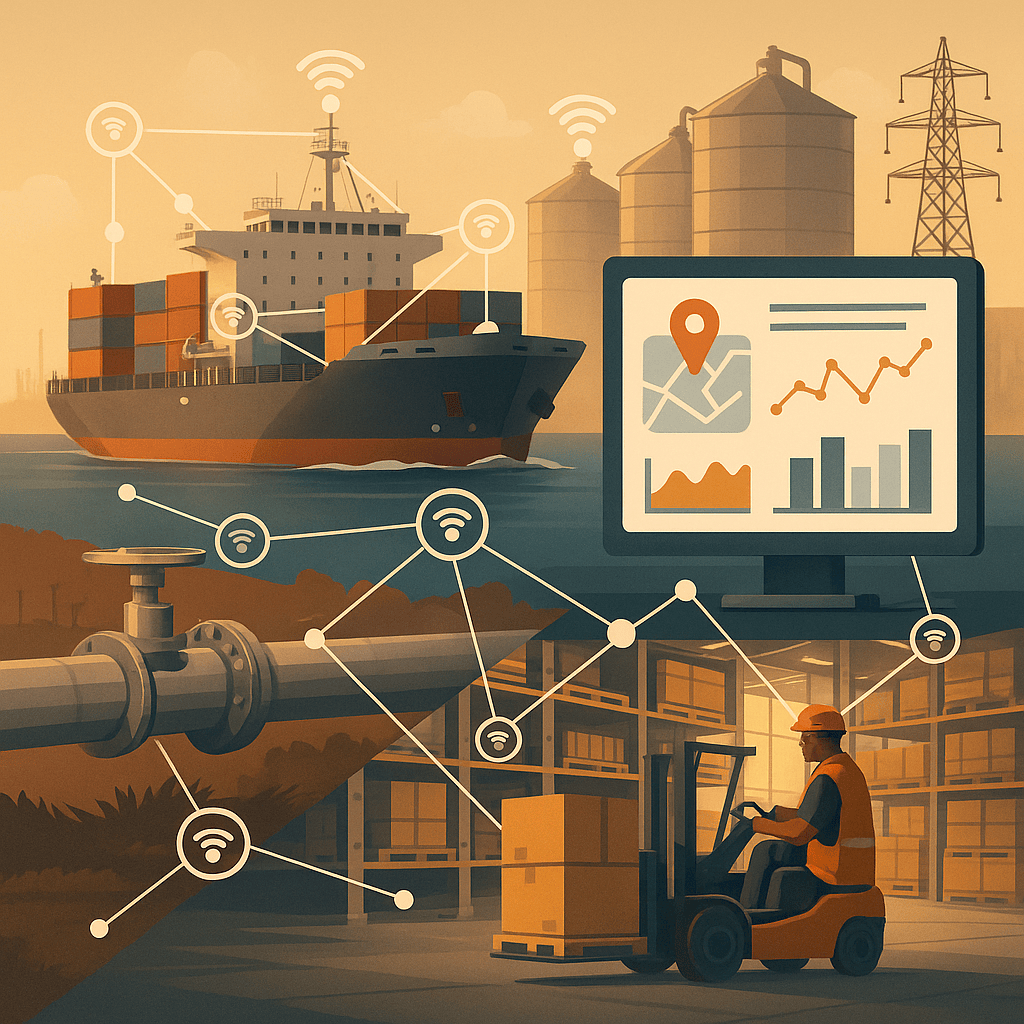
Commodity supply chains are complex networks of vessels, pipelines, warehouses, and trading hubs. Small delays or disruptions can create ripple effects that impact profitability and market positions. Real-time IoT data integration is becoming a game-changer for CIOs who want to give their firms better visibility and control.

IoT devices generate vast amounts of data. Sensors on ships can report location and cargo conditions, pipelines can send pressure readings, and warehouses can track inventory in real time. When this data is integrated with trading systems, firms gain the ability to anticipate disruptions, optimize logistics, and improve risk management.

Databricks provides the processing power to handle these large streams of IoT data, while Snowflake offers a secure and governed environment for analytics. Python enables fast development of ingestion scripts and machine learning models that detect anomalies. Integration with .NET-based CTRM systems ensures trading desks have access to the latest supply chain insights.

The challenge lies in execution. Real-time IoT data pipelines require cloud-native infrastructure, secure APIs, and resilient deployments in Azure and Kubernetes. Few internal IT teams have the capacity to design and maintain these systems while also supporting daily trading operations.

Staff augmentation provides CIOs with immediate expertise. External engineers can build streaming data pipelines, configure real-time dashboards, and connect IoT feeds to existing CTRM systems. This allows firms to deploy solutions faster while reducing risk and ensuring compliance.

Real-time IoT integration is no longer optional for firms that want to remain competitive. With staff augmentation, CIOs can unlock supply chain visibility, improve resilience, and give traders the insights they need to respond to global events as they happen.

Building ESG Data Pipelines in Databricks for Commodity Trading Firms

Environmental, Social, and Governance (ESG) reporting is becoming a critical requirement for commodity trading firms. Regulators, investors, and counterparties are demanding greater transparency into sustainability practices. CIOs are under pressure to provide accurate, auditable ESG data, but most legacy systems were never designed to handle this type of reporting.

Databricks offers a scalable solution for ESG data pipelines. It can process structured and unstructured data, from carbon emissions logs to supplier compliance records. Python scripts automate data ingestion and cleaning, while Delta Lake ensures consistency and traceability. Snowflake provides a governed layer for analytics and reporting dashboards that satisfy regulators and investors.

The integration challenges are significant. ESG data often comes from diverse sources, including IoT sensors, logistics providers, and third-party sustainability platforms. Connecting these streams to legacy CTRM systems built on .NET requires robust APIs and careful orchestration in Azure and Kubernetes. Without sufficient expertise, projects can stall or produce unreliable results.

Staff augmentation provides CIOs with the resources to deliver ESG pipelines quickly. External engineers experienced with Databricks, Snowflake, and Python can design scalable workflows and enforce governance rules. Meanwhile, .NET specialists can integrate ESG data with existing CTRM platforms, ensuring trading systems reflect sustainability metrics alongside financial performance.

ESG is not just about compliance; it is becoming a competitive differentiator. Firms that can provide transparent, accurate reporting will gain credibility with stakeholders and position themselves for long-term success. With staff augmentation, CIOs can move faster, reduce risks, and deliver ESG capabilities without overloading internal teams.

How GenAI Copilots Will Transform Commodity Trading IT Departments

The rise of generative AI is changing how IT departments operate across industries, and commodity trading is no exception. GenAI copilots can support developers, analysts, and operations teams by automating repetitive tasks, generating code, and surfacing insights faster than traditional tools. For CIOs, the question is not whether to adopt GenAI but how to integrate it effectively into trading IT.

GenAI copilots can accelerate software development by assisting with .NET and Python code, reducing the time required for bug fixes, integrations, and enhancements. They can help data engineers build Databricks pipelines or optimize queries for Snowflake. In risk management, copilots can generate scenario models or automate compliance documentation, ensuring faster responses to regulatory demands.

The transformation potential is significant, but there are challenges. CIOs must ensure copilots are trained on secure, relevant data. They must also integrate copilots into Azure-based environments with governance and monitoring in place. Adoption requires not just technology but change management across IT teams.

Staff augmentation provides a pathway to make this adoption successful. External AI specialists can help configure copilots, connect them to CTRM and ETRM systems, and implement guardrails for compliance and security. By combining internal expertise with augmented teams, CIOs can accelerate GenAI adoption while minimizing risks.

GenAI copilots will not replace IT teams but will augment their capabilities. CIOs who embrace this shift will empower their departments to innovate faster, manage complexity, and focus more on strategic goals.

The CIO’s Guide to Building Future-Proof Commodity Trading Platforms

Commodity trading platforms are the backbone of global trade, yet many are under pressure from new regulations, data demands, and technological shifts. For CIOs, the challenge is not only keeping systems operational today but ensuring they remain relevant in the future.

Future-proofing starts with architecture. Platforms must be modular and cloud-native, able to scale with market volatility. .NET remains reliable for transaction-heavy workflows, while Python is essential for analytics and AI. Databricks and Snowflake enable unified data strategies, and Kubernetes provides the orchestration needed for resilience and agility in Azure or hybrid environments.

Another key factor is integration. Future-ready platforms must connect seamlessly with banks, brokers, and counterparties through secure APIs. They must also support automation, compliance reporting, and real-time analytics to meet evolving business needs.

The barrier is execution. Internal IT teams often lack the time and capacity to redesign platforms while managing daily trading operations. Staff augmentation provides the additional expertise needed. External engineers can design modern APIs, containerize legacy modules, and implement data governance frameworks. By blending internal knowledge with external specialists, CIOs can move faster and reduce risk.

Future-proofing is not about predicting every change but about building platforms flexible enough to adapt. With staff augmentation, CIOs gain the resources to design scalable, integrated, and resilient systems that can withstand both regulatory pressures and market demands.

Cloud Migration Without Downtime: Lessons from Trading CIOs

For commodity trading firms, cloud migration is not just a technical project but a business-critical initiative. Systems must remain online for traders, risk managers, and compliance teams even as workloads move into Azure or hybrid environments. A single outage during migration can disrupt operations and cost millions.

CIOs who have successfully executed migrations highlight a few key lessons. Planning is essential. Legacy CTRM systems, often built in .NET, must be mapped carefully to new architectures. Data pipelines written in Python must be validated for accuracy and performance in Databricks and Snowflake. Testing every stage reduces the risk of downtime when workloads go live.

Another lesson is the importance of phased rollout. Rather than migrating everything at once, successful CIOs move workloads in waves, starting with non-critical services and gradually transitioning core systems. This reduces risk and provides opportunities to refine processes before high-value applications are impacted.

The biggest challenge is bandwidth. Internal IT teams are tasked with both supporting daily trading operations and managing migration activities. Staff augmentation provides a solution. External engineers can manage containerization, Kubernetes deployments, and cloud governance, while in-house teams maintain business continuity. This division of responsibilities ensures migration happens smoothly without overwhelming internal staff.

Cloud migration without downtime is possible when firms combine strong planning, phased execution, and the right mix of internal and external expertise. For CIOs, staff augmentation ensures they can modernize IT infrastructure quickly while protecting the continuity of trading operations.

Why Commodity Trading Firms Still Rely on Legacy C# .NET Systems and How to Modernize

Many commodity trading firms still depend on legacy C# .NET systems that were built years ago. These platforms are deeply embedded in trading operations, handling everything from deal capture to settlements. Despite their age, they continue to run because of their reliability and the difficulty of replacing them.

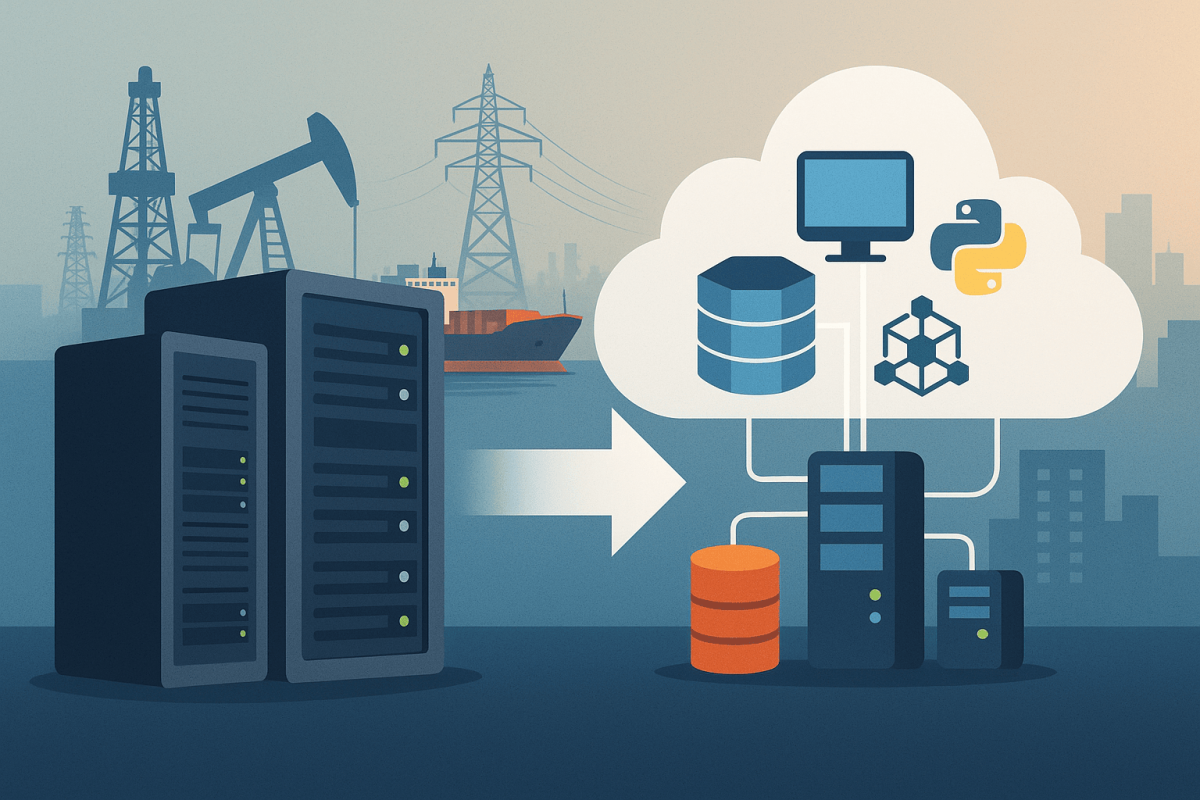
However, reliance on legacy systems creates challenges. They are harder to integrate with modern platforms like Databricks and Snowflake, they limit the adoption of cloud-native approaches in Azure and Kubernetes, and they require scarce skills to maintain. As markets evolve, firms that remain locked into these systems risk falling behind competitors who can innovate more quickly.

Modernization does not always mean replacing everything at once. CIOs can begin by building APIs that extend the functionality of .NET applications, allowing them to connect with modern services. Python can be used for data processing and machine learning, while Databricks provides a scalable environment for analytics. Snowflake ensures governed storage and reporting, while Kubernetes manages containerized services alongside legacy systems.

Staff augmentation plays a key role in this process. External .NET engineers can stabilize legacy platforms, while specialists in Python, Databricks, and Snowflake build new layers of functionality. This blended approach allows firms to innovate without disrupting day-to-day trading operations.

The path forward is hybrid. Legacy .NET systems remain in place where they add value, while modernization layers bring new speed and flexibility. By leveraging staff augmentation, CIOs can modernize incrementally, reduce risks, and prepare their firms for a future where agility and scalability define success.

Staff Augmentation as a Strategic Tool for CIOs Facing Digital Pressure

CIOs in commodity trading face constant pressure to modernize IT environments while keeping systems reliable and compliant. Market volatility, new regulations, and rapid advances in analytics tools all demand faster delivery from IT. Yet internal teams are often stretched thin, juggling legacy system support and transformation projects at the same time.

Staff augmentation is more than a temporary fix. It is a strategic tool that enables CIOs to respond quickly to digital pressures. By adding external engineers with expertise in C# .NET, Python, Databricks, Snowflake, Azure, and Kubernetes, firms can scale capacity instantly. These specialists bring proven experience, shortening delivery timelines and avoiding common pitfalls.

The model also provides flexibility. CIOs can ramp resources up during intense migration or compliance projects, then scale down once objectives are achieved. This prevents overstaffing while ensuring projects remain on schedule. Knowledge transfer from augmented specialists strengthens the skills of internal teams, leaving long-term value even after engagements end.

The benefits extend across IT portfolios. Augmented Python developers can accelerate machine learning initiatives, .NET specialists can stabilize CTRM systems, and cloud engineers can design secure hybrid architectures. Together, they help CIOs maintain operational stability while pushing forward with modernization.

Digital pressure is not going away. Firms that treat staff augmentation as a strategic lever, rather than a last resort, will deliver transformation faster and with less risk. This approach ensures IT departments remain aligned with business goals, even under constant external and internal demands.

Why Kubernetes is Gaining Traction in Commodity Trading IT Departments

Commodity trading IT has grown more complex as firms shift toward hybrid and multi-cloud environments. Applications must scale rapidly, integrate with analytics platforms, and support global operations without downtime. Kubernetes has become the platform of choice for orchestrating these workloads.

Kubernetes provides automation for deploying, scaling, and managing containerized applications. For trading firms, this means critical workloads like risk analytics, settlement processing, and real-time dashboards can run reliably across cloud and on-prem environments. Integration with Azure and Databricks ensures that data-intensive jobs can scale on demand.

The benefits extend beyond infrastructure. Kubernetes enables better resource utilization, cost control, and resilience. Applications can be updated with minimal downtime, ensuring that CTRM and ETRM systems, many of which have .NET components, remain available during market hours. Python-based analytics services can also be containerized, allowing CIOs to standardize deployment practices across their IT ecosystem.

However, the learning curve is steep. Designing secure clusters, managing network policies, and configuring governance across Snowflake and Databricks connections require skills that many in-house IT teams lack.

Staff augmentation provides the missing expertise. By leveraging external Kubernetes specialists, CIOs can deploy clusters faster, optimize workloads, and build secure frameworks for sensitive trading applications. Augmented teams also provide knowledge transfer so internal staff can maintain systems over the long term.

Kubernetes adoption is accelerating because it addresses the scalability and resilience needs of modern trading IT. With staff augmentation, CIOs can unlock its benefits without overwhelming internal teams, ensuring they stay ahead in a competitive market.


Cloud Security Challenges for CIOs in Commodity Trading

Commodity trading firms are rapidly adopting cloud platforms such as Azure, Databricks, and Snowflake to modernize their IT environments. While these platforms provide scalability and flexibility, they also introduce new security risks. Recent breaches across industries highlight vulnerabilities that CIOs in trading must address proactively.

One major challenge is misconfigured access. Poorly designed identity and access management policies can expose sensitive CTRM and financial data to unauthorized users. Another is insecure APIs, which attackers can exploit to gain entry into trading workflows. Data sovereignty and compliance add complexity, as regulations often require strict controls on where data is stored and how it is encrypted.

Cloud-native attacks are growing more sophisticated. Hackers target Kubernetes clusters, exploit weak container images, or use lateral movement once inside a cloud environment. These risks are particularly concerning in commodity trading, where downtime or data loss can directly impact global supply chains and market positions.

CIOs cannot rely on internal teams alone to secure these environments. Staff augmentation provides access to external cloud security specialists who bring proven practices. Augmented engineers can configure Azure policies, enforce Snowflake governance, deploy Kubernetes monitoring, and implement continuous compliance frameworks. This reduces the likelihood of breaches while allowing internal teams to stay focused on trading support.

The lesson from recent breaches is clear. Cloud adoption without strong security planning leaves firms exposed. By combining in-house expertise with augmented talent, CIOs can protect trading operations, meet compliance obligations, and maintain the trust of counterparties.

Securely Connecting Banks, Brokers, and CTRM Systems Through APIs

Commodity trading involves a constant flow of data between banks, brokers, and CTRM systems. Payments, confirmations, collateral management, and risk exposures must all be updated quickly and accurately. For CIOs, APIs are the foundation of secure and efficient integration across this ecosystem.

APIs allow real-time data sharing, reducing manual reconciliation and errors. Modern architectures use REST or gRPC APIs to connect .NET-based CTRM systems with external financial institutions. Python plays an important role in building adapters and automating validations, while Databricks and Snowflake provide platforms for storing and analyzing data received from multiple counterparties.

Security is the biggest concern. Every API must be authenticated, encrypted, and monitored to prevent unauthorized access. Azure API Management and Kubernetes ingress controllers provide centralized governance and scaling for large numbers of API calls. These controls ensure compliance with regulations and maintain the trust of trading partners.

Internal IT teams often struggle to design and deploy secure APIs while maintaining daily operations. Staff augmentation offers a solution. External engineers with API security expertise can design access policies, implement monitoring, and integrate APIs with CTRM and back office systems. This allows CIOs to accelerate projects while avoiding security risks.

APIs are no longer just a technical convenience. They are a strategic tool that underpins the speed, trust, and compliance of modern commodity trading. With staff augmentation, CIOs can ensure these integrations are secure, reliable, and scalable.