Posts by "Camelia"

Delivery Reliability Under Real Constraints

Commodity trading data initiatives routinely stall not because of technology, but because ownership and operating rhythm are unclear. This article explains why hiring and classic outsourcing fail to fix the problem, what “good” really looks like, and how staff augmentation can be used as an operating model to restore accountable, predictable delivery in 3. 4 weeks.

Continue reading

Capacity Without Lowering Standards

Commodity trading IT delivery does not slow down because people work less; it slows down because no one can say, in a single sentence, who owns what, on what cadence, with what decision rights. This article explains why unclear ownership and operating rhythm paralyse delivery, why hiring and classic outsourcing usually make it worse, and how a disciplined staff augmentation model restores momentum without diluting standards.

Continue reading

Commodity Trading: Schemas That Survive Change

In commodity trading IT, delivery slows to a crawl when no one owns the data architecture end-to-end and the operating rhythm across business, quant, and IT teams is undefined. This article explains why hiring and classic outsourcing rarely fix that problem, and how a disciplined staff augmentation model can restore clear ownership, predictable cadence, and delivery speed within weeks.

Continue reading

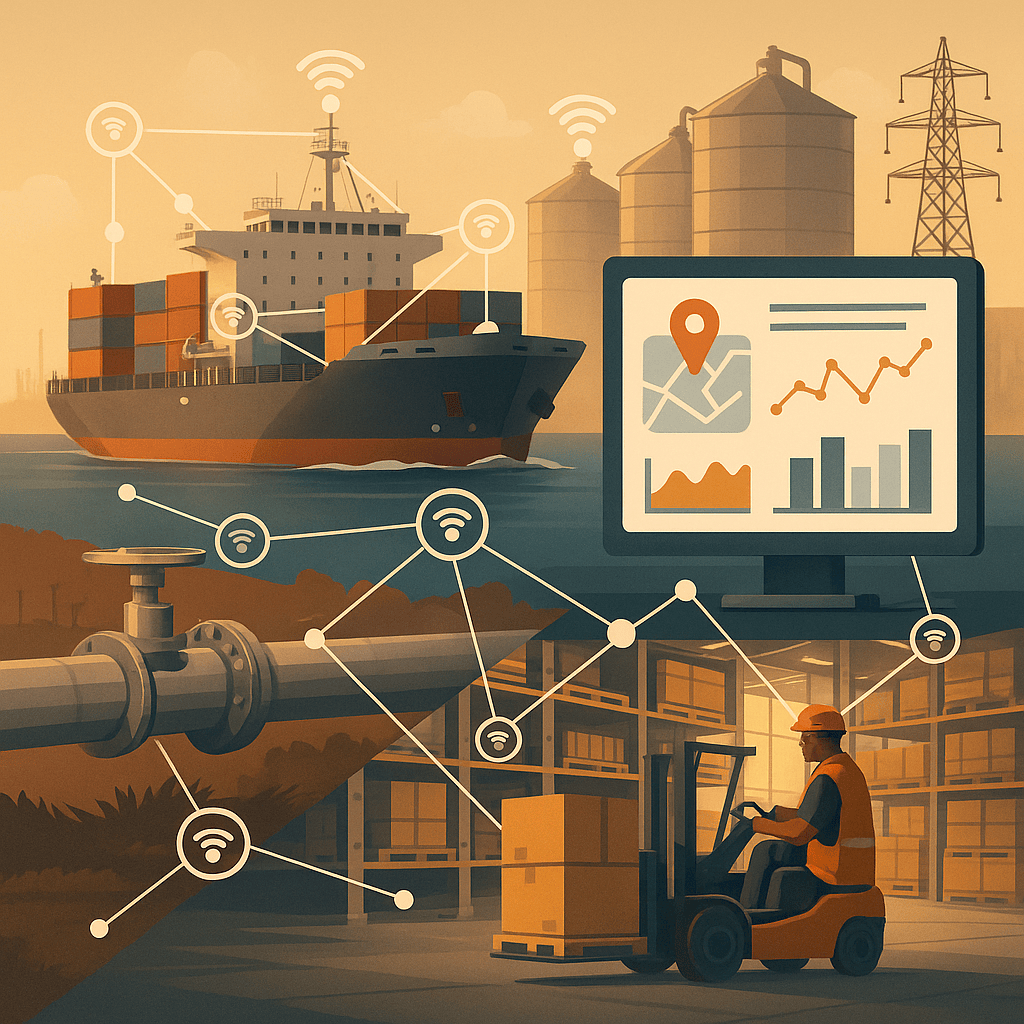
Why Real-Time IoT Data Integration Matters for Commodity Supply Chains

Commodity supply chains are complex networks of vessels, pipelines, warehouses, and trading hubs. Small delays or disruptions can create ripple effects that impact profitability and market positions. Real-time IoT data integration is becoming a game-changer for CIOs who want to give their firms better visibility and control.

IoT devices generate vast amounts of data. Sensors on ships can report location and cargo conditions, pipelines can send pressure readings, and warehouses can track inventory in real time. When this data is integrated with trading systems, firms gain the ability to anticipate disruptions, optimize logistics, and improve risk management.

Databricks provides the processing power to handle these large streams of IoT data, while Snowflake offers a secure and governed environment for analytics. Python enables fast development of ingestion scripts and machine learning models that detect anomalies. Integration with .NET-based CTRM systems ensures trading desks have access to the latest supply chain insights.

The challenge lies in execution. Real-time IoT data pipelines require cloud-native infrastructure, secure APIs, and resilient deployments in Azure and Kubernetes. Few internal IT teams have the capacity to design and maintain these systems while also supporting daily trading operations.

Staff augmentation provides CIOs with immediate expertise. External engineers can build streaming data pipelines, configure real-time dashboards, and connect IoT feeds to existing CTRM systems. This allows firms to deploy solutions faster while reducing risk and ensuring compliance.

Real-time IoT integration is no longer optional for firms that want to remain competitive. With staff augmentation, CIOs can unlock supply chain visibility, improve resilience, and give traders the insights they need to respond to global events as they happen.


Building ESG Data Pipelines in Databricks for Commodity Trading Firms

Environmental, Social, and Governance (ESG) reporting is becoming a critical requirement for commodity trading firms. Regulators, investors, and counterparties are demanding greater transparency into sustainability practices. CIOs are under pressure to provide accurate, auditable ESG data, but most legacy systems were never designed to handle this type of reporting.

Databricks offers a scalable solution for ESG data pipelines. It can process structured and unstructured data, from carbon emissions logs to supplier compliance records. Python scripts automate data ingestion and cleaning, while Delta Lake ensures consistency and traceability. Snowflake provides a governed layer for analytics and reporting dashboards that satisfy regulators and investors.

The integration challenges are significant. ESG data often comes from diverse sources, including IoT sensors, logistics providers, and third-party sustainability platforms. Connecting these streams to legacy CTRM systems built on .NET requires robust APIs and careful orchestration in Azure and Kubernetes. Without sufficient expertise, projects can stall or produce unreliable results.

Staff augmentation provides CIOs with the resources to deliver ESG pipelines quickly. External engineers experienced with Databricks, Snowflake, and Python can design scalable workflows and enforce governance rules. Meanwhile, .NET specialists can integrate ESG data with existing CTRM platforms, ensuring trading systems reflect sustainability metrics alongside financial performance.

ESG is not just about compliance; it is becoming a competitive differentiator. Firms that can provide transparent, accurate reporting will gain credibility with stakeholders and position themselves for long-term success. With staff augmentation, CIOs can move faster, reduce risks, and deliver ESG capabilities without overloading internal teams.

How GenAI Copilots Will Transform Commodity Trading IT Departments

The rise of generative AI is changing how IT departments operate across industries, and commodity trading is no exception. GenAI copilots can support developers, analysts, and operations teams by automating repetitive tasks, generating code, and surfacing insights faster than traditional tools. For CIOs, the question is not whether to adopt GenAI but how to integrate it effectively into trading IT.

GenAI copilots can accelerate software development by assisting with .NET and Python code, reducing the time required for bug fixes, integrations, and enhancements. They can help data engineers build Databricks pipelines or optimize queries for Snowflake. In risk management, copilots can generate scenario models or automate compliance documentation, ensuring faster responses to regulatory demands.

The transformation potential is significant, but there are challenges. CIOs must ensure copilots are trained on secure, relevant data. They must also integrate copilots into Azure-based environments with governance and monitoring in place. Adoption requires not just technology but change management across IT teams.

Staff augmentation provides a pathway to make this adoption successful. External AI specialists can help configure copilots, connect them to CTRM and ETRM systems, and implement guardrails for compliance and security. By combining internal expertise with augmented teams, CIOs can accelerate GenAI adoption while minimizing risks.

GenAI copilots will not replace IT teams but will augment their capabilities. CIOs who embrace this shift will empower their departments to innovate faster, manage complexity, and focus more on strategic goals.